For Zero-Waste Beginners
Shopping without packaging changes what information is available to you. Here's what Polish law says about labelling loose goods, and what it means in practice.
Zero-waste shopping in Poland has grown significantly. Bulk stores, zero-waste shops, market stalls, and deli counters are all part of the picture. When you remove the packaging, you also remove most of what EU food labelling law requires. This section explains what remains — and what you can reasonably ask for.
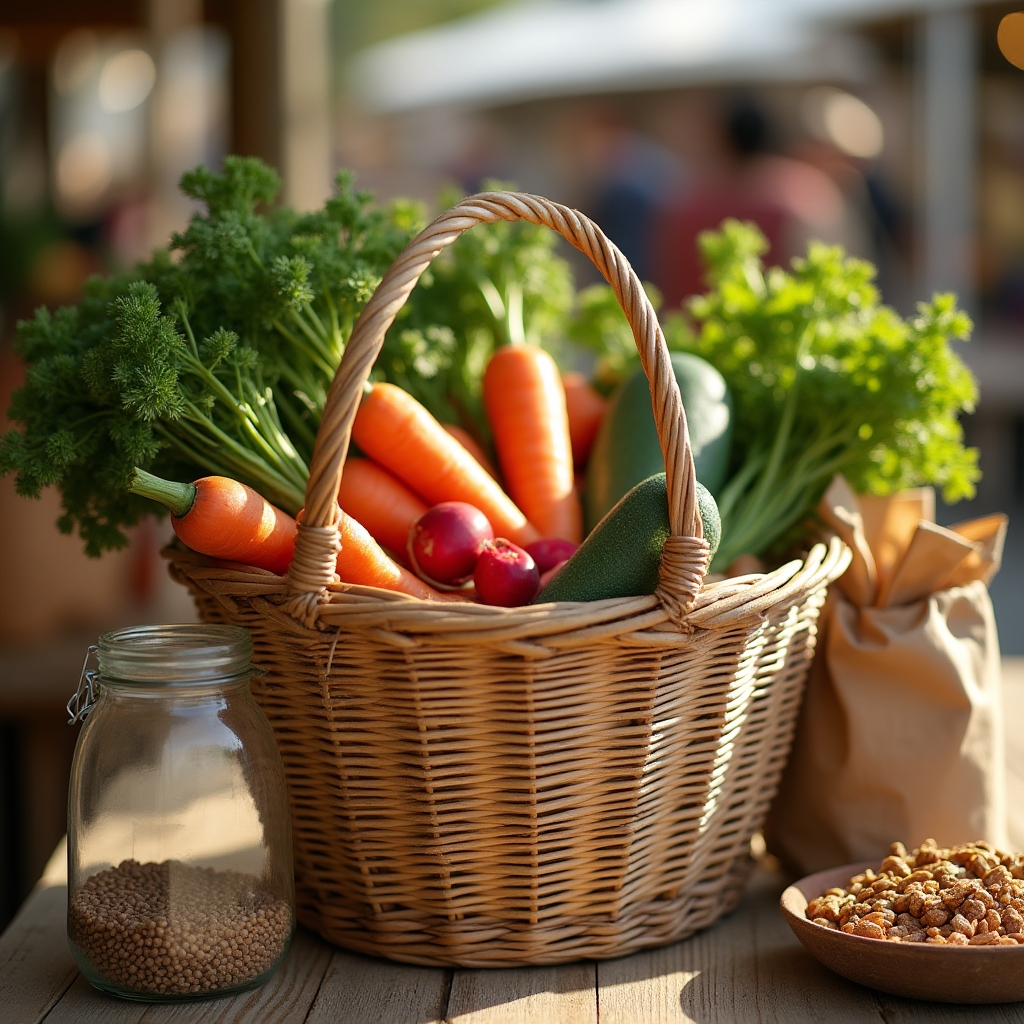
What labelling rules apply to loose and unpackaged food?
EU Regulation 1169/2011 applies differently to food sold loose (na wagę or luzem in Polish) compared to pre-packaged food. For non-prepacked food, the mandatory information that must be made available to consumers is reduced. The seller must be able to provide allergen information on request. Beyond that, much of what's required for packaged food — the full ingredients list, nutrition declaration, Nutri-Score (if the manufacturer uses it) — is not required for loose goods.
This doesn't mean the information doesn't exist. A bulk store selling loose nuts, grains, or dried fruit has typically purchased those goods from a supplier with full labelling. The information is in the supply chain. Many zero-waste stores make this information available voluntarily, either on display cards at the bins or on request. The question is simply that you need to ask, because it isn't legally required to be displayed in the same way.
Questions worth asking at a zero-waste or bulk store
Do you have allergen information for this product?
Sellers of loose food are legally required to be able to provide allergen information. This doesn't mean it has to be displayed, but it must be available when asked. A reputable store will have it on record.
Where does this product come from?
Origin labelling requirements differ for loose goods. For some product categories (like fresh fruit and vegetables), origin must be displayed. For others, it's more variable. Asking directly is the most reliable approach.
Is this certified organic (ekologiczny)?
Organic certification applies to the product and the seller's registration, not just the packaging. If a product is sold as organic at a market stall or bulk store, the seller should be able to show their certification number. The EU organic logo on a handwritten label alone isn't sufficient evidence.
What's the best-before date (data minimalnej trwałości)?
For loose food, date marking requirements also differ. Sellers should still be able to tell you when the product was received and give you an indication of how long it keeps. This is particularly relevant for grains, nuts, and dried goods that can go stale or rancid.
Market stalls: a different situation again
Polish farmers' markets (targi, bazary) operate under their own dynamic. Small producers selling directly to consumers have specific exemptions from some food labelling requirements, particularly for very small quantities of food sold locally. These exemptions exist to support small-scale food production. They also mean that the information available at a market stall can vary considerably from one seller to another.
At a farmers' market, the relationship between seller and buyer is more direct. You can ask the producer questions directly and get answers that no label could give you. Where the bread was baked, whether the eggs are from hens that range freely, what variety of apple this is. This directness is part of what makes market shopping different.
What you shouldn't assume is that "market" automatically means "without additives" or "organic." Both can be true. Neither is guaranteed by the setting alone. The questions above still apply.
When you do encounter a label in zero-waste shopping
Not everything in zero-waste shopping is label-free. You might buy a product in a glass jar with a paper label, or a locally produced item in minimal packaging. In these cases, the same EU labelling rules apply as for any other packaged food, with one common exception: very small packages (where the largest surface area is less than 10cm²) have reduced mandatory labelling requirements.
Handwritten labels are common in smaller zero-waste stores and market contexts. A handwritten label is not automatically less reliable than a printed one, but it's worth knowing that the same verification mechanisms don't apply. If a handwritten label says "bez glutenu" (gluten-free) or "ekologiczny," the same question applies as anywhere else: what's the basis for that claim?
Polish terms useful for zero-waste shopping
The connection between zero-waste and label literacy
There's an interesting overlap between zero-waste shopping and food label literacy. People who are paying attention to packaging for environmental reasons often end up paying more attention to what's in the packaging too. The skills transfer. Understanding what "składniki" means, knowing how to find allergen information, knowing that "naturalny" doesn't have a legal definition — these matter whether you're shopping at a zero-waste store or a hypermarket.
The rest of our content covers packaged food labelling in detail. The Why This Exists page goes through Nutri-Score, E-numbers, "naturalny" claims, and unit prices. The Video Walkthroughs show real Polish labels being read. All of it is relevant whether your shopping basket has packaging in it or not.