Why This Exists
Polish food labelling follows EU law. That doesn't make it easy to understand. Here's what we noticed, and what we set out to do about it.
The gap between what food labels are required to show and what consumers actually understand from them is significant. This isn't a criticism of consumers. The labels are dense, the terminology is technical, and the system has gaps built into it by design. Coraho exists to bridge that gap using publicly available information.
The Nutri-Score: what it is and why it's missing from so many products
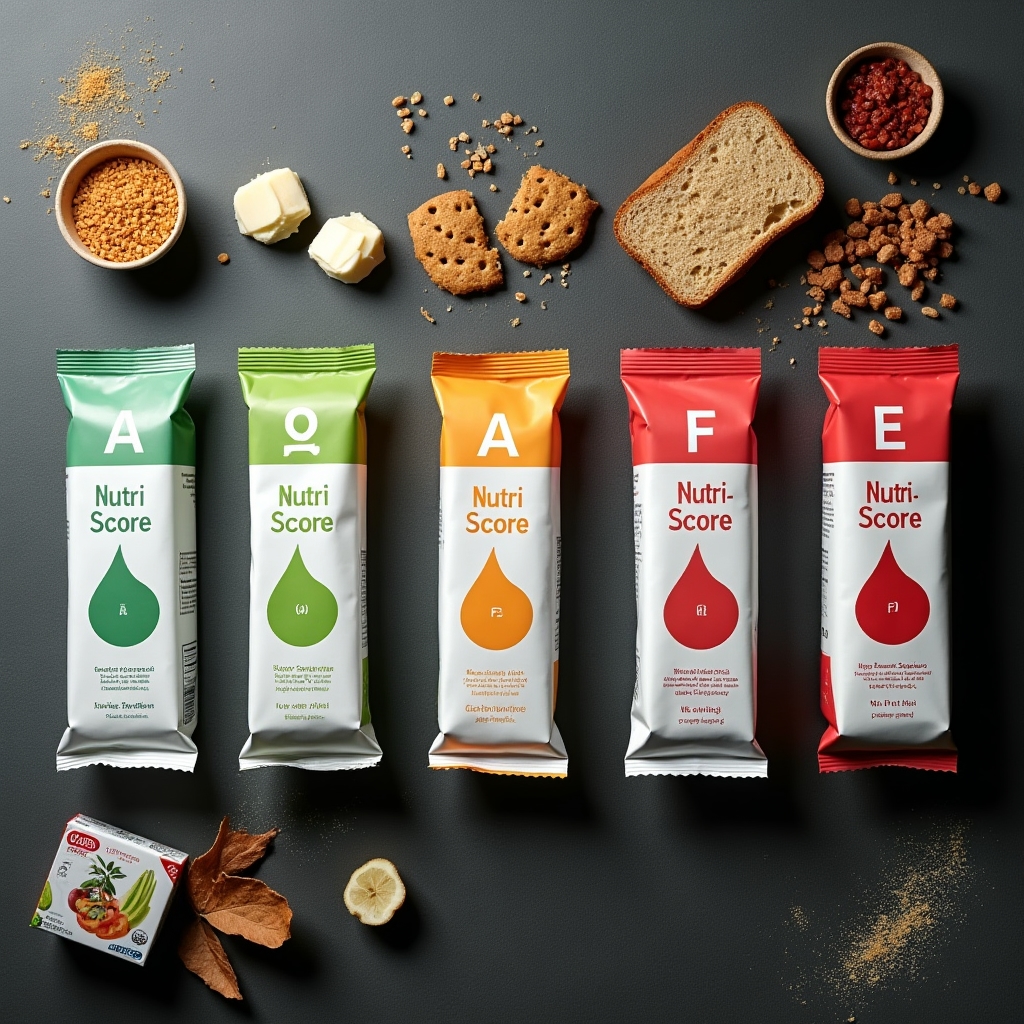
Nutri-Score is a front-of-pack nutrition label system developed in France and subsequently adopted by several EU countries including Belgium, Germany, Switzerland, Spain, and Luxembourg. It assigns a letter grade from A (most favourable) to E (least favourable) based on a scoring algorithm that considers both positive nutritional components (fibre, protein, fruit and vegetable content) and negative ones (energy, saturated fat, sugars, sodium).
In Poland, Nutri-Score is voluntary. Manufacturers choose whether or not to display it. This creates an uneven landscape on Polish supermarket shelves: some products carry the coloured label prominently on the front, others don't, and the absence of a label tells you nothing reliable about the product's nutritional profile. A manufacturer might choose not to display Nutri-Score because their product would score poorly. Or they might simply not have gone through the process of adopting the system. You can't tell which from the shelf.
The algorithm itself was revised in 2023. The updated version made changes to how red meat, fish, whole grains, and dairy products are scored. Products that displayed an A or B under the previous algorithm may now score differently. If a product's Nutri-Score label hasn't been updated, it may reflect the old calculation. This is worth keeping in mind when comparing products from different manufacturers who adopted the system at different times.
What Nutri-Score does not assess: the presence of additives, the degree of processing, the origin of ingredients, or whether the product is ultraprocessed in the sense described by the NOVA classification system. A product can score A on Nutri-Score and still contain a long list of additives. The two systems are measuring different things.
E-numbers: the approval process and what the ranges mean
Every E-number you see on a Polish food label represents a food additive that has been evaluated and approved for use in the European Union. The European Food Safety Authority (EFSA) carries out these assessments. An additive receives an E-number only after EFSA has reviewed the available evidence on safety and concluded that the substance poses no risk to human health at the levels used in food. This is worth stating clearly, because the presence of an E-number on a label is sometimes treated as inherently suspicious. It isn't.
The number ranges are meaningful. E100-E199 covers colours. E200-E299 covers preservatives. E300-E399 covers antioxidants and acidity regulators. E400-E499 covers thickeners, stabilisers, and emulsifiers. E500-E599 covers salts and raising agents. E600-E699 covers flavour enhancers. E900-E999 covers glazing agents, propellants, and miscellaneous additives. E1000 and above covers additional emulsifiers and other substances.
Some E-numbers that appear frequently and are entirely ordinary
Some E-numbers carry additional labelling requirements. E102 (Tartrazine), E104, E110, E122, E124, and E129 — a group of synthetic colours sometimes called the "Southampton Six" — must be accompanied by the warning "may have an adverse effect on activity and attention in children" on the label. This requirement comes from EU regulation and applies in Poland. If you see this phrase on a Polish label, it indicates the presence of one or more of these colours.
The important principle is this: E-numbers are not interchangeable in terms of what they are or what they do. Reading an ingredients list means distinguishing between them rather than treating the category as a single concern.
Why "naturalny" means less than you might expect
Polish food packaging uses the word "naturalny" (natural) extensively. It appears on front-of-pack marketing text, in product names, and sometimes in the ingredients list itself. The question of what it legally means depends on where it appears and what exactly is being described.
For the term "natural flavouring" (aromat naturalny), there is a specific EU definition. A natural flavouring must be obtained exclusively by physical, microbiological, or enzymatic processes from plant, animal, or microbiological material. This is more restricted than using the word "naturalny" in a general marketing context. But "naturalny" as a standalone marketing claim on the front of packaging has no equivalent single legal definition in Polish or EU food law that restricts its use.
This contrasts with "ekologiczny" or "bio" or the EU organic logo, which are tightly regulated. A product carrying the EU organic certification leaf logo has been through a verified certification process. "Naturalny" has not gone through an equivalent process and cannot be assumed to imply the same thing.
The Polish Office of Competition and Consumer Protection (UOKiK) does monitor misleading claims, and there have been enforcement actions against claims found to be deceptive. But the absence of a precise legal definition for "naturalny" as a general marketing term means the word can appear on products with highly processed ingredients, artificial colours, or a long additives list. The ingredients section remains the reliable source of information.
Unit prices: the law, the display, and the comparison
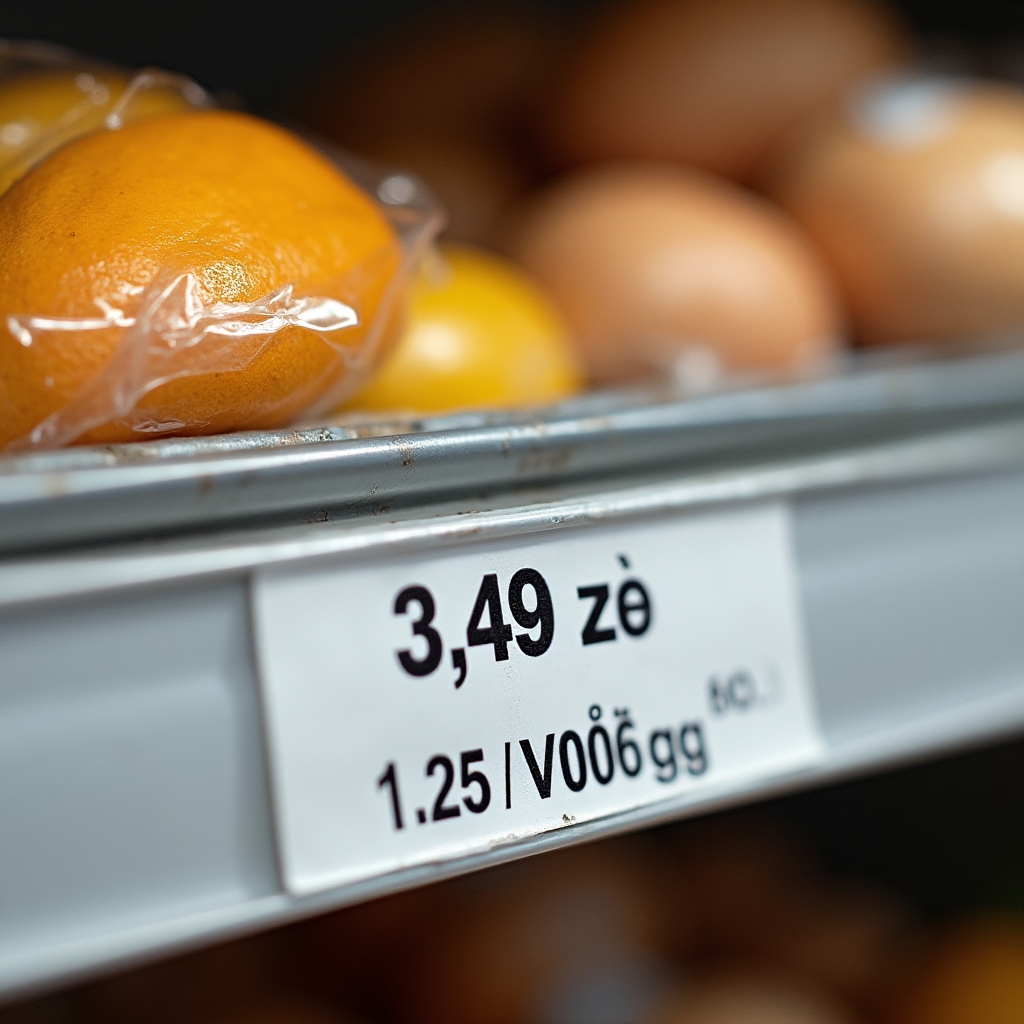
EU Directive 98/6/EC, as implemented in Polish law, requires retailers to display the unit price of products alongside the selling price. The unit price is the price per kilogram, litre, metre, or other standard unit. For food products, this is typically expressed as price per 100g or per 100ml. The purpose of this requirement is to allow consumers to compare products of different sizes on a like-for-like basis.
In practice, the clarity of unit price display varies considerably between retail formats. In large hypermarkets like Auchan or Carrefour, unit prices are generally displayed on shelf edge labels in a standardised format. In smaller convenience stores, including Żabka, the unit price is still legally required but may be displayed in smaller type, in a less prominent position, or in a format that's harder to locate quickly.
There are situations where comparison is less straightforward. When a product is on promotion, the promotional price label may not always make the unit price equally visible. When comparing products sold by weight (e.g., deli counter items) with packaged equivalents, the reference units need to match. When packaging sizes differ significantly — a 175g versus a 500g yogurt — the unit price is the only reliable way to compare cost.
To find unit prices in a Żabka: look at the small label below the product on the shelf. The unit price is legally required to be there. If you're using the Żabka app, unit prices are typically shown in the product listing. For Auchan, both the shelf label and the online shop display unit prices, usually in a standardised position on the price tag.